English police are facing growing scrutiny after officers handcuffed an 18-year-old university student as he bled to death following a fatal stabbing, allegedly after believing the attacker’s false claims that he had been the victim of a racist assault.
The case has sparked outrage across Britain, fueled political debate over policing standards, and prompted calls for the release of body-worn camera footage from the responding officers.
Alan Mendoza, executive director and co-founder of the London-based Henry Jackson Society think tank, said the case reflected what he described as deeper cultural problems within British policing.

“The killing of Henry Nowak shows how far the rot of political correctness has set into the British policing mentality,” Mendoza told Fox News Digital.
“The reflex attitude today appears to be to believe any and every claim that mentions racism,” he added. “It clearly trumped actual murder in this case as a dying Mr. Nowak was arrested on the say-so of his Sikh assailant without any facts being established by the officers attending.”
Vickrum Digwa, 23, was convicted Thursday at Southampton Crown Court of murdering Henry Nowak, an 18-year-old finance student at the University of Southampton, during a confrontation on December 3, 2025.
According to reports presented during the trial, officers arriving at the chaotic scene initially treated Nowak as the suspect after Digwa allegedly claimed he had been racially abused and attacked. Police handcuffed the injured student before realizing the severity of his wounds. He later collapsed and died at the scene despite attempts to provide first aid.

Following the verdict, Hampshire Constabulary publicly apologized and referred the incident to the Independent Office for Police Conduct (IOPC), the police watchdog for England and Wales.
“I’m sorry that he was handcuffed and arrested in the moments before he lost consciousness,” Temporary Deputy Chief Constable Robert France said in a statement.
Prosecutors told jurors that Digwa stabbed Nowak multiple times using a 21-centimeter blade described during the trial as a Sikh kirpan-style weapon. Digwa claimed he acted in self-defense after being racially abused, but jurors rejected the defense and found him guilty of murder.
The case has since triggered fierce public debate online and across British media, with critics accusing police of prioritizing allegations of racism over basic investigative procedures and emergency medical care.
Speaking on GB News, Reform UK MP Robert Jenrick called for police bodycam footage to be released if the Nowak family consents.

“The officers chose to prioritize the accusation of racial abuse over saving the life of this young man,” Jenrick said. “I think that was a terrible mistake.”
Jenrick also criticized what he described as a muted response from Britain’s political leadership compared to reactions following other high-profile cases involving police conduct.
“The Prime Minister says absolutely nothing. The Home Secretary says absolutely nothing,” he added.
The killing has also raised concerns about potential backlash against Britain’s Sikh community, with Sikh organizations publicly distancing themselves from the crime and condemning the attack.
In a statement released after the verdict, Sikh community groups stressed that the actions of one individual should not be viewed as representative of Sikhism.
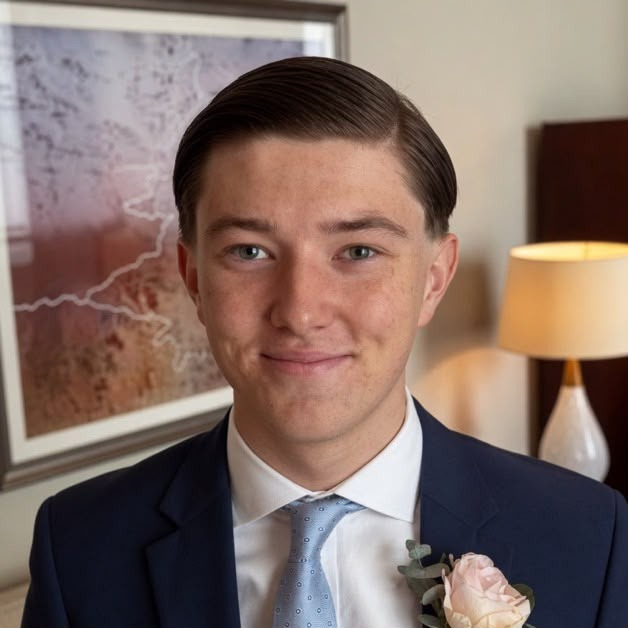
“Henry’s life has tragically been cut short by a moment of madness by an individual for which there can be no excuses,” the statement said.
The organizations also acknowledged that the police response — particularly the decision to handcuff the dying victim — had intensified criticism and “unnecessarily stirred up community hatred.”
The statement further clarified that legal protections allowing Sikhs in Britain to carry ceremonial kirpans for religious purposes do not apply if a blade is used violently.
“We understand in this case the weapon that may have been used was not the normal Kirpan worn by fully practicing Sikhs,” the statement read.

Mendoza echoed that point, saying most Sikhs who carry ceremonial knives use very small symbolic blades.
“It’s legal for Sikhs to carry ceremonial knives in the U.K., but they are almost always tiny ones that religious authorities have ordained are sufficient to fulfill the obligation,” he said. “He had one of those, plus his eight-inch blade.”
Prosecutors also alleged during the trial that Digwa had a fascination with weapons and knives. Evidence presented in court reportedly showed he collected weapons and frequently searched for them online.
The Independent Office for Police Conduct investigation into the officers’ actions remains ongoing.