The final moments of Tim Curry’s life have come into sharper focus following the release of 911 dispatch audio that captured emergency responders being sent to the actor’s Los Angeles home on the night he died.
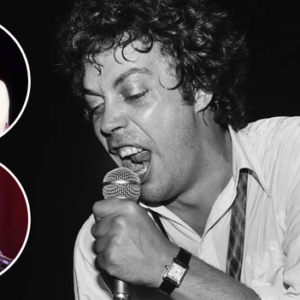
Curry, the celebrated British actor whose unforgettable performances included Dr. Frank-N-Furter in The Rocky Horror Picture Show and Pennywise in It, died at age 80 on Aug. 25, 2026. His longtime manager, Marcia Hurwitz, confirmed his death at his home in Toluca Lake, Los Angeles. No cause of death has been publicly disclosed.
The newly released dispatch recording provides a glimpse into the emergency response that followed.
911 dispatchers called it a “death investigation”
According to the audio reviewed by the Daily Mail, dispatchers repeatedly communicated Curry’s address as police officers and paramedics were sent to the residence.
The call was described as an “ambulance death investigation,” while the Los Angeles Police Department later confirmed that a death investigation report had been completed.
Los Angeles City Fire officials also confirmed that crews responded to a medical call at approximately 11:23 p.m. at an address believed to be Curry’s.
First responders found a male patient at the scene, where he was pronounced dead. Fire officials did not identify the patient by name, but confirmed that the address matched Curry’s residence.
There has been no public determination of the cause of death.
Other reporting has indicated that authorities do not suspect foul play.
A long road of health struggles
Curry had lived with significant health complications for more than a decade after suffering a major stroke in 2012. The stroke left him partially paralyzed and dependent on a wheelchair for mobility.
The actor spoke candidly about the lasting effects of the stroke during a 2025 interview connected to his memoir, Vagabond.
He explained that he still could not walk and had significant problems with his left leg. His mobility limitations had also made performing onstage increasingly difficult.
“I still can’t walk, which is why I’m in this silly chair,” Curry said during a special screening marking the 50th anniversary of The Rocky Horror Picture Show.
He added that he would not be singing or dancing again soon because of the continuing problems with his leg.
Despite those limitations, Curry remained connected to his work and his fans. His memoir, released in 2025, offered a rare look into his life while preserving the privacy that had always surrounded the actor.
Curry’s stroke happened without warning

In a 2025 interview with CBS Sunday Morning, Curry described how unexpectedly his medical emergency began.
He was receiving a massage at his Los Angeles home when the person giving him the massage became concerned and suggested that a doctor should be contacted.
Curry said he felt fine and was not aware of any symptoms. Nevertheless, the massage therapist called 911.
An ambulance arrived, and Curry was taken from his home on a stretcher. He later learned that he had suffered two brain bleeds.
“I felt fine, I had no symptoms that I was aware of,” he recalled, explaining that he had not initially known what was happening.
He was eventually diagnosed with a stroke and underwent brain surgery. Curry spent about a month in the hospital undergoing rehabilitation.
One of the most difficult parts of his recovery was relearning how to speak.
“I had to learn how to speak again,” he recalled. “That was very weird.”
For someone who described himself as a person who loved words and communication, losing the ability to speak was especially difficult.
His father’s stroke made the diagnosis even more frightening
Curry also revealed that the news immediately brought his father, James, to mind.
James, a Royal Navy chaplain, had survived a stroke when Curry was only 11 years old. When doctors told Curry that he had suffered a stroke himself, he immediately thought about his father’s experience.
“I knew that a lot of people didn’t survive a stroke,” Curry said, “and that he was an exception, and so I was scared.”
That family history gave an already frightening medical diagnosis an even more personal dimension.
Curry nevertheless continued to adapt to life after the stroke, eventually returning to creative work and remaining active in voice acting and other projects
The role that changed everything

Long before his health struggles, Curry had built a career defined by extraordinary range.
His professional stage career began with the 1968 London production of Hair. He went on to work extensively in London’s West End and on Broadway, establishing himself as an actor capable of moving effortlessly between comedy, musical theater and darker, more theatrical characters.
His breakthrough came with Dr. Frank-N-Furter.
Curry first played the flamboyant scientist in The Rocky Horror Show on London’s West End in 1973 and later brought the role to Broadway in 1974. In 1975, he starred in the film adaptation, The Rocky Horror Picture Show.
The movie eventually became a cultural phenomenon, with Curry’s performance at its center. His combination of theatricality, humor and menace made Frank-N-Furter one of the most recognizable characters in cult cinema.
The role also became something larger than a career breakthrough. In his final years, Curry reflected on the influence Frank-N-Furter had on audiences, particularly young people who saw the character as an invitation to embrace individuality.
As Curry put it in his 2025 interview, the character had given many teenagers “permission to be different.”
From Broadway to Hollywood
Curry never allowed himself to be defined by one character.
His stage credits included acclaimed performances in productions such as The Pirates of Penzance and Spamalot, where he played King Arthur. His theater work earned him multiple Tony Award nominations.
On screen, he appeared in films including Clue, Annie, Home Alone 2: Lost in New York, Legend, Charlie’s Angels, Scary Movie 2 and the 1990 television adaptation of Stephen King’s It, in which he played the terrifying Pennywise.
He also became a distinctive voice actor, lending his unmistakable voice to animated projects including Peter Pan & the Pirates. That work earned him a Daytime Emmy Award.
His television career continued for decades. One of his later notable television appearances came in Criminal Minds, where he played criminal Billy Flynn in two episodes in 2010.
Curry’s career ultimately stretched across stage, film, television and voice acting, earning him a reputation as one of the most versatile character performers of his generation.

He kept his private life private
For all his fame, Curry remained unusually protective of his personal life.
He never married and had no children. Born in Cheshire, England, in 1946, he was the younger child of Patricia, a school secretary, and James, a Royal Navy chaplain.
He had an older sister, Judith, a concert pianist who died in 2001.
Curry spent part of his childhood in Plymouth and attended boarding school. In 1958, when he was 12, he lost his father to pneumonia.
Those early experiences became part of the story he eventually explored in Vagabond, but Curry remained careful about how much of his private identity he shared publicly.
In a 2025 interview, he described maintaining an element of mystery around himself as something important to him. (CBS News)
A final reflection on mortality

Curry’s comments about mortality during his final years now carry particular weight.
After surviving a devastating stroke and adapting to a life dramatically different from the one he had known before, he spoke openly about reaching an age he had not necessarily expected to see.
He also acknowledged that death was something he tried, like most people, to avoid thinking about.
But he said he suspected that, when the time eventually came, he might welcome it.
That perspective came after years of confronting the physical consequences of his stroke while continuing to find ways to communicate, work and connect with audiences.
Curry died at his Los Angeles home on Aug. 25, 2026, at the age of 80. His cause of death has not been disclosed.
The newly released 911 audio offers only a brief and somber glimpse into the emergency response that followed, while the larger story of Curry’s final years is one of a performer who continued to confront profound health challenges without losing the humor, voice and individuality that had defined his remarkable career.
For generations of fans, however, his legacy will remain inseparable from the unforgettable characters he created — from Dr. Frank-N-Furter to Pennywise and the many eccentric, funny and sinister figures in between.
Source: Compiled from various sources